
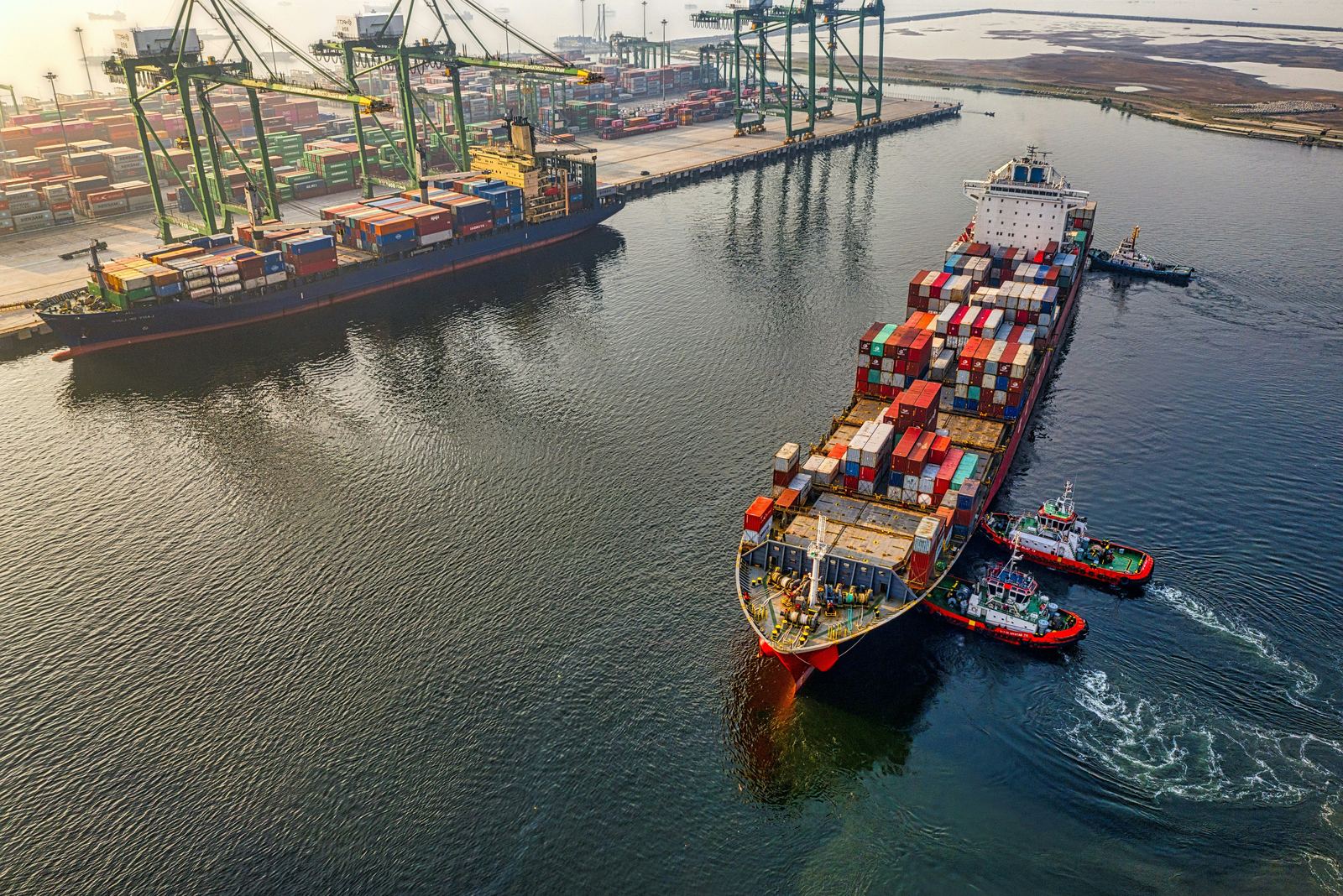
Case studies: a busy route, under a brighter light.
Trade between Australia and Indonesia keeps growing, and regulators on both sides are watching payments more closely. This is what the public record shows, and how it connects to Lens.
Trends and cases
The numbers
AUD 35.38 bn
Two-way trade in 2024. Indonesia is Australia’s 9th-largest trading partner.
Source: Australian Embassy, Jakarta
39.8 m
International funds-transfer reports received by PPATK in 2025, up 25.7% on 2024.
Source: PPATK annual figures
183,281
Suspicious transaction reports received by PPATK in 2025, up 2.7%.
Source: PPATK annual figures
45
Remittance and virtual-asset registrations AUSTRAC cancelled, suspended or refused in the year to September 2026.
Source: AUSTRAC
Three shifts to plan for
-
More of the economy is in scope.
AUSTRAC’s tranche 2 obligations for newly regulated professions began on 1 July 2026, widening the group of businesses expected to spot and escalate unusual activity.
Source: AUSTRAC
-
Trade is a recognised laundering channel.
AUSTRAC’s guide describes schemes that misrepresent the price, quantity or quality of goods, and notes that no single indicator is definitive. Reasons beside a score matter more than a lone flag.
-
Indonesia’s framework is still moving.
FATF’s June 2026 follow-up report upgraded one Indonesian rating (terrorist-financing sanctions). Three ratings remain Partially Compliant, and beneficial ownership of legal persons stays at Largely Compliant.
Source: FATF follow-up report
Recent cases
-
2023–24
Crown and SkyCity
The Federal Court ordered civil penalties of AUD 450 million (Crown) and AUD 67 million (SkyCity) for breaches of the AML/CTF Act.
Source: AUSTRAC enforcement actions
-
Dec 2024
-
Jul 2025
Mounties
AUSTRAC began proceedings against one of NSW’s largest club operators, alleging serious and systemic non-compliance.
Source: AUSTRAC
-
Feb 2026
Illegal gold mining probe Indonesia
Indonesian police opened a money-laundering investigation reported at Rp 25 trillion, tied to illegal gold mining. Commodity flows are firmly on the enforcement radar.
Source: The Jakarta Post
-
May 2026
Castra and Princeton Securities
Penalties of AUD 50,000 and AUD 45,000 (plus costs) were ordered in separate proceedings. Smaller businesses are in the frame too.
Source: AUSTRAC enforcement actions
-
Case study
Tobacco syndicate Indonesia
A syndicate remitted funds to companies in the UAE and Indonesia, many of the transfers funded by large cash deposits. AUSTRAC published it as a case study.
Source: AUSTRAC case study
Most Australian penalties so far involve gambling and other sectors, not exporters. They show the direction of enforcement, not a risk specific to any exporter. Figures are as published by the sources above, as at November 2026.
From the record to the checks
What this means for Lens.
Each of Lens’s three modules answers a pressure visible in the public record above.
-
Module 1
Bilingual KYB and UBO risk mapping
- In the record
- Tranche 2 widens the group of businesses expected to know their customers, and Indonesia’s beneficial-ownership rating stays at Largely Compliant.
- What Lens checks
- Missing beneficial owners and disclosure gaps, ABN and ACN check digits, and Indonesian and English name variants matched to a watchlist.
-
Module 2
Trade invoice anomaly detection
- In the record
- AUSTRAC describes schemes that misrepresent the price, quantity or quality of goods, and Indonesian police are probing commodity flows tied to illegal gold mining.
- What Lens checks
- Unit prices against a commodity baseline, HS code and description mismatches, odd routing, and IA-CEPA origin claims that don’t fit the exporter.
-
Module 3
Corridor velocity and structuring triage
- In the record
- PPATK received 39.8 million international funds-transfer reports in 2025, and a published AUSTRAC case involved transfers to the UAE and Indonesia funded by large cash deposits.
- What Lens checks
- Rolling volume spikes, clusters just under thresholds, and many-to-one or one-to-many flows.
This mapping is illustrative. None of the cases above involved Lens, and Lens is decision support: it makes no claim that it would have prevented or detected any of them.
See how Lens checks for this.
Three modules, one explained case, built for small teams.